Service 12
Water Softening & Conditioning
Removing the calcium and magnesium that scale heaters, spot glassware and shorten appliance life.
The short answer
Water softening removes the dissolved calcium and magnesium that make water hard. Hard water leaves scale in water heaters and kettles, spots glassware, dulls laundry and shortens the life of dishwashers and washing machines. A softener exchanges those minerals for sodium or potassium, and is set up around the actual hardness of your water rather than a factory default.
What usually causes it
Scale in the water heater and on fixtures
Scale builds up wherever water is heated. A heater running on hard water loses efficiency and eventually fails early. Shower heads and aerators clog with white crust.
Spotted dishes and stiff laundry
The everyday evidence of hard water. It is cosmetic until you count the extra detergent and the shortened appliance life behind it.
A softener that is not keeping up
An undersized or badly programmed unit regenerates at the wrong time, runs out of capacity mid-week, or wastes salt. Correct sizing and hardness settings usually fix it without new equipment.
Signs it is time to call
Any one of these is worth a phone call. Two or more together usually means something is already failing.
- White scale on faucets and shower heads
- Spots on glasses after washing
- Soap that will not lather
- Stiff or rough laundry
- Water heater scale and popping noises
- Softener using excessive salt
- Softener regenerating at inconvenient times
How a softener works
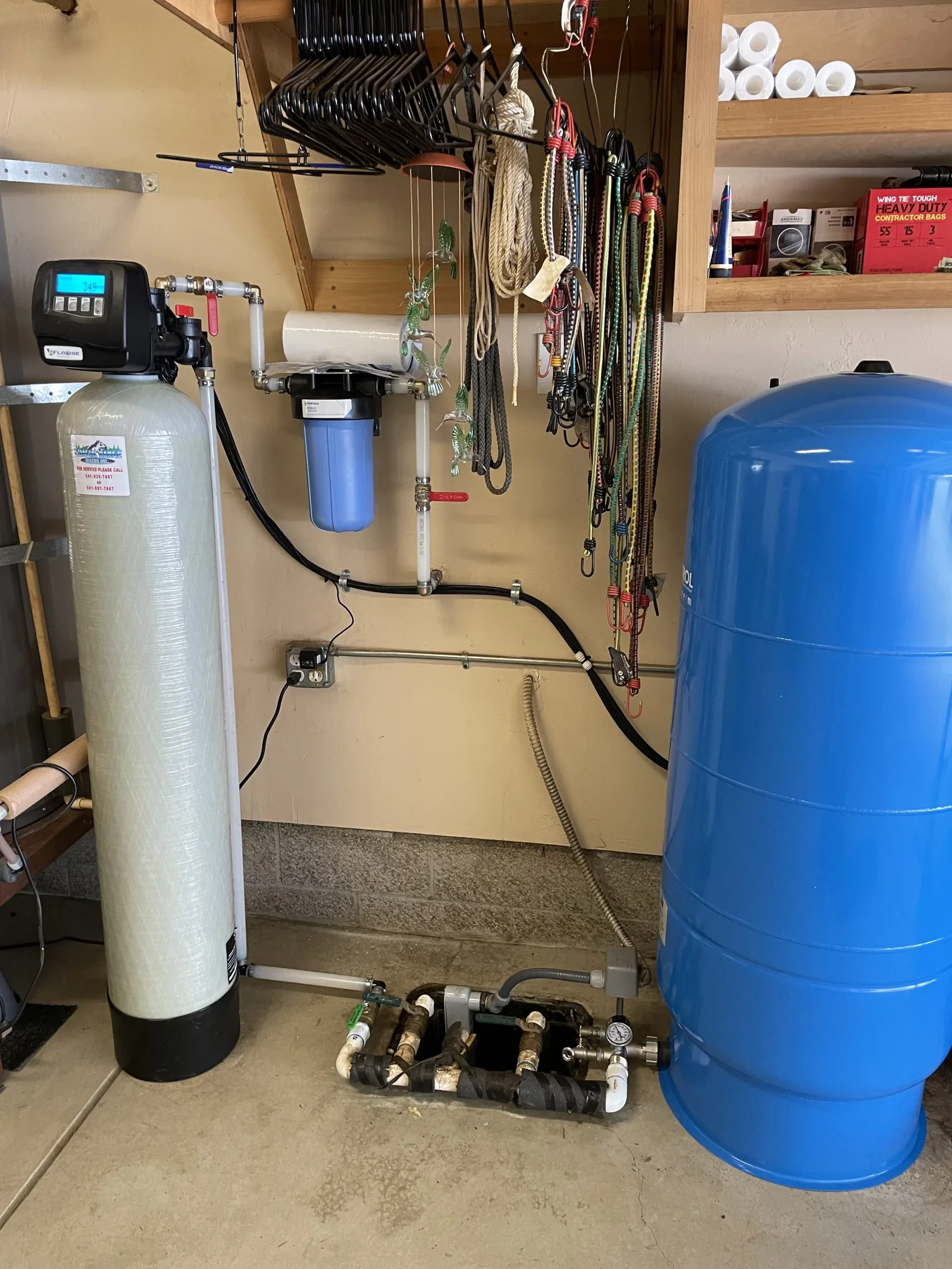
Water passes through a tank of ion-exchange resin. Calcium and magnesium bind to the resin and sodium or potassium is released in their place. After a set volume of water, the unit backwashes and recharges the resin with brine from the salt tank.
The two settings that matter are the hardness of the incoming water and the capacity of the resin bed. Get either wrong and the unit either runs out of soft water or wastes salt and water on unnecessary regeneration.
Softening versus conditioning
A softener removes hardness minerals. A conditioner alters them so they do not scale, without removing them — no salt, no sodium added, but a different result. Which one is right depends on whether you care about the sodium content, whether you have a septic system, and how hard the water actually is.
Where softening belongs in the system
A softener should come after sediment filtration and after any iron removal, otherwise the resin fouls with iron and the bed is ruined. It should be installed with a bypass and a hard-water tap for drinking and irrigation if you prefer unsoftened water at the kitchen sink.
How the job runs
-
01
Test hardness
Grains per gallon, plus iron and manganese, because iron fouls resin.
-
02
Size the unit
Resin capacity matched to household water use and regeneration interval.
-
03
Install with a bypass
Properly plumbed, with a hard-water line to the kitchen and outdoor taps if wanted.
-
04
Set and explain
Program hardness and capacity, then show you how to load salt and what to watch for.
What you get
- Sizing based on measured hardness, not a default setting
- Iron checked first so the resin is not ruined
- Bypass and hard-water tap options
- Salt and maintenance explained in plain terms
How do I know if my well water is hard?
The everyday signs are scale on fixtures, spotting on glassware, soap that does not lather well and stiff laundry. A hardness test gives you the number in grains per gallon, which is what the softener has to be set to.
Is softened water safe to drink?
Yes, though it contains more sodium than hard water. If you are on a low-sodium diet, keep an unsoftened tap at the kitchen sink or use potassium chloride instead of sodium chloride. Many households soften the whole house and keep the kitchen cold tap hard.
Does a softener remove iron?
Only very low levels. Iron fouls softener resin, so if your water has meaningful iron it should be removed upstream. Softening first and treating iron later is a common and costly installation mistake.
How much salt does a softener use?
A correctly sized and programmed unit for a family home typically uses one or two bags a month. A unit using far more is usually oversized, set to the wrong hardness, or regenerating too often.
Is a salt-free conditioner as good as a softener?
It is different, not equivalent. A salt-free conditioner reduces scale formation but does not remove hardness, so water still spots and soap still lathers poorly. It suits people who do not want sodium or a brine discharge; it does not deliver soft water.
Related services
Well water filtration
Whole-house filtration designed from a water test — sediment, iron, manganese, sulphur and taste, not a generic cartridge.
Read moreWell water testing
Sampling and interpretation for bacteria, nitrate, arsenic, iron, manganese, hardness and pH.
Read moreWell water purification
UV sterilisation, arsenic and nitrate treatment for wells where filtration alone is not enough.
Read moreWater softening across the service area
This service is available throughout Lane, Linn, Benton and Douglas counties. These pages cover the towns we are called to most.
Talk to a well tech
Not sure whether it is the pump, the tank or the well?
That is what the phone is for. Describe what the water is doing and we will tell you what it sounds like.
Request service
Book water softening
Send the details and we will call back with a time. If the water is off now, call 541-935-7867 instead.
Phone
Based in
22071 Fisk Rd
Noti, OR 97461
Emergency
No water, a burst line or a pump that will not stop: call any hour, including weekends.