Service 02
Well Pump Installation in Oregon
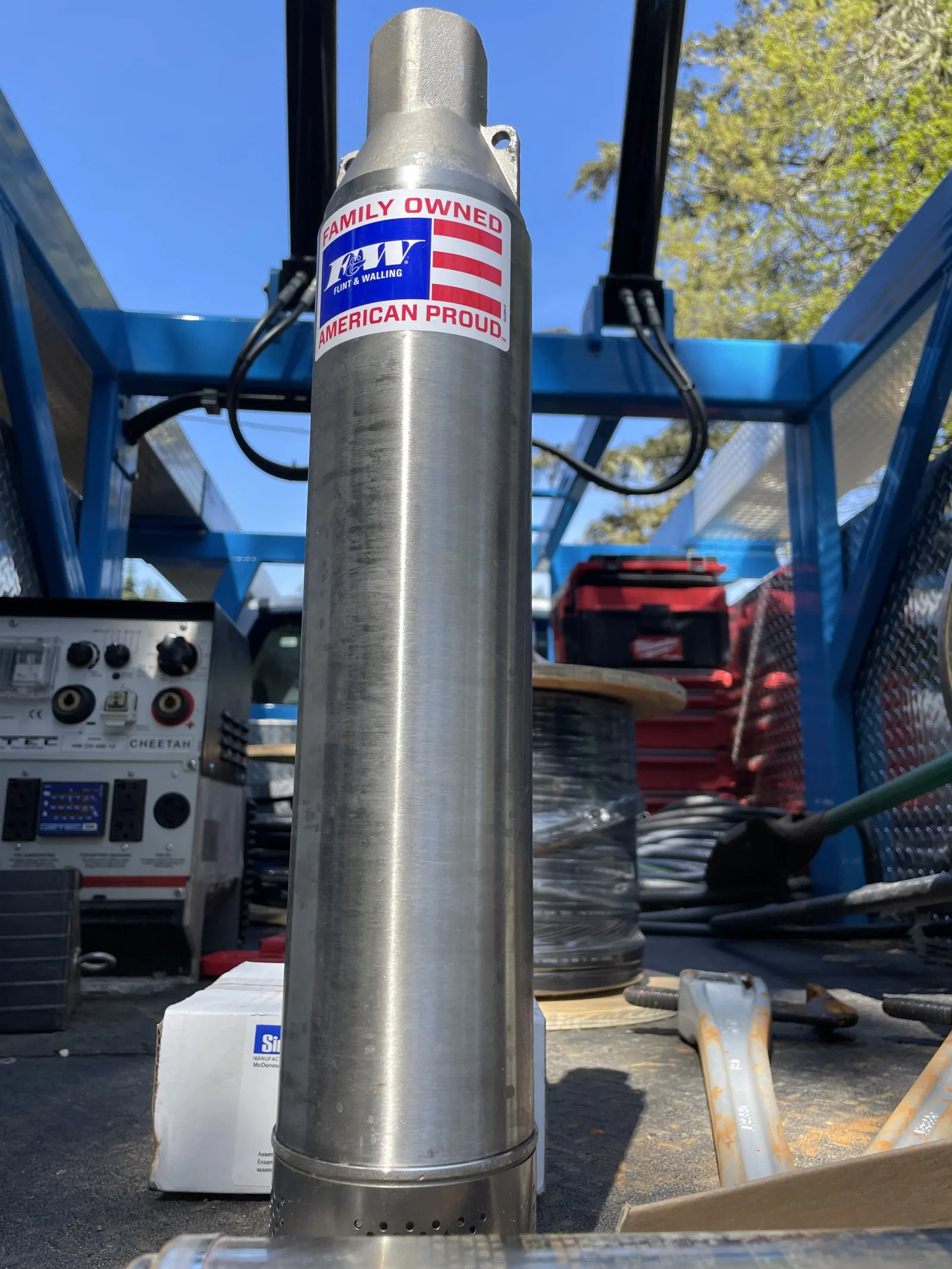
New submersible, jet and booster pump installation sized to the well yield, the depth and what the house actually uses.
The short answer
Well pump installation means setting a new pump at the right depth with the right horsepower, drop pipe, cable and controls for that specific well. The three numbers that decide it are the static water level, the well yield in gallons per minute, and the peak demand of the house. Get those wrong and the pump either burns out early or cannot keep up with a shower and a washing machine at the same time.
What usually causes it
A new build with no pump yet
The well is drilled and capped, and the house is waiting. We set the pump, the drop pipe, the pitless adapter, the wiring and the pressure system, then commission it and confirm the flow and pressure at the house.
A replacement where the old pump was undersized
Plenty of rural Oregon houses were plumbed for one bathroom and now have three. The original pump cannot hold pressure when everything runs at once. We measure the demand and size up without oversizing the motor for the well.
A low-yield well that needs a storage strategy
Some foothill wells produce two or three gallons a minute — enough for a household, but not fast enough to run a sprinkler directly. A storage tank and booster pump lets the well recover at its own pace while the house draws what it needs.
Signs it is time to call
Any one of these is worth a phone call. Two or more together usually means something is already failing.
- New construction with a drilled but unplumbed well
- Existing pump that cannot keep up with the house
- Pump that runs dry in late summer
- Replacing a pump after a lightning strike
- Adding irrigation or a shop to an existing system
- Converting from a shared or hand-dug supply
Sizing is the whole job
A pump has a curve: at zero flow it makes its maximum pressure, and as flow increases the pressure falls. The job is to pick a pump whose sweet spot sits where your house actually operates — typically 40 to 60 psi at five to ten gallons a minute for a family home.
We start with the well log: total depth, static water level, drawdown and yield. Then we add the vertical lift, the friction loss in the drop pipe and the pressure the house needs. Only then do we choose horsepower. A bigger pump is not a better pump; a pump that matches the well is.
What goes in the hole
A typical submersible installation includes the pump and motor, a check valve, a torque arrestor, the drop pipe, the electrical cable with a proper splice, a safety rope or cable where the well calls for it, and a pitless adapter through the casing. At the surface: the controller or control box, the pressure switch, the pressure tank, and the plumbing into the house.
We use stainless pumps and brass or stainless fittings in the well. Galvanised fittings in a wet well are a future repair waiting to happen.
Pressure systems and constant-pressure controls
A standard system uses a pressure switch and a bladder tank, cycling between a cut-in and cut-out pressure. A constant-pressure system uses a variable-frequency drive to hold a steady pressure at any flow. The second costs more and is worth it in houses with long runs, multiple bathrooms, or irrigation.
We install and set up both, and we will tell you which one fits the well and the budget rather than defaulting to the more expensive option.
How the job runs
-
01
Well and demand review
We read the well log, measure the static level where possible, and work out the peak demand of the house.
-
02
Pump selection
Horsepower, stages, drop pipe size and cable gauge chosen against the well, not a catalogue default.
-
03
Installation
Pump set, drop pipe and cable run, pitless adapter fitted, controller and pressure system connected and labelled.
-
04
Commissioning
We run a drawdown and flow test, set the pressure switch or drive, check for leaks and walk you through the system.
What you get
- Pump sized to the well log and the real household demand
- Stainless and brass wetted parts instead of galvanised fittings
- Properly sized cable and splice — the most common cause of premature pump failure
- Pressure system set up and explained before we leave
What size well pump do I need for a house?
Most single-family homes in this area land between 1/2 and 1 horsepower, but the right answer comes from the well depth, the static water level, the yield and the pressure you want at the house. A shallow, high-yield well needs far less pump than a deep, low-yield one. We size from those numbers rather than square footage.
How deep should the pump be set?
Deep enough to stay submerged through the lowest water level the well sees, and high enough above the bottom to avoid pulling sand and sediment. That is usually 10 to 30 feet off the bottom, adjusted for the drawdown. Setting a pump at the very bottom is a common mistake.
How long does a well pump last in Oregon?
Seven to fifteen years is typical, with the low end more common on wells with sand, high mineral content or frequent cycling. A pump that is correctly sized, set at the right depth and paired with a healthy pressure tank usually lands at the upper end.
Can you install a pump on a well that already has one?
Yes. Most installations are replacements. We pull the old pump, inspect the casing and the pitless adapter, and reuse what is sound rather than replacing hardware that does not need it.
Do you install constant-pressure (VFD) systems?
Yes. Variable-frequency drives hold a steady pressure instead of cycling between two set points. They suit houses with long pipe runs, multiple bathrooms, or irrigation. We will tell you when a conventional tank-and-switch system is the better value.
Related services
Well pump replacement
Pulling an ageing or failed pump and setting a new one, with the well, the drop pipe and the controls inspected while it is open.
Read moreWell pump repair
Diagnosis and repair for submersible, jet and booster pumps that have stopped, slowed down or started short-cycling.
Read morePressure tank repair
Testing pre-charge, replacing failed bladders and sizing a new tank so the pump stops short-cycling.
Read moreWell pump installation across the service area
This service is available throughout Lane, Linn, Benton and Douglas counties. These pages cover the towns we are called to most.
Talk to a well tech
Not sure whether it is the pump, the tank or the well?
That is what the phone is for. Describe what the water is doing and we will tell you what it sounds like.
Request service
Book well pump installation
Send the details and we will call back with a time. If the water is off now, call 541-935-7867 instead.
Phone
Based in
22071 Fisk Rd
Noti, OR 97461
Emergency
No water, a burst line or a pump that will not stop: call any hour, including weekends.