Treatment
Water Conditioning
Correcting hardness, acidity and corrosivity so water stops eating plumbing and staining fixtures.
The short answer
Water conditioning adjusts the chemistry of well water so it stops damaging the plumbing and fixtures. The three problems we see most in western Oregon are hardness, which scales heaters and fixtures; low pH, which makes water acidic and corrosive to copper and brass; and iron or manganese, which stains and clogs. Conditioning is different from purification: it changes how the water behaves rather than removing a health-related contaminant.
What usually causes it
Acidic water eating the plumbing
Low-pH water is common in the Coast Range foothills. It corrodes copper pipe from the inside, leaves blue-green staining on fixtures, and shortens the life of water heaters. A neutraliser raises the pH with sacrificial media.
Hard water scaling everything
Scale builds in the water heater, on faucets and inside appliances. A softener or conditioner addresses it, but only if it is sized to the actual hardness.
Iron and manganese staining
Orange and black staining on fixtures, laundry and concrete. Conditioning alone will not remove it; it needs oxidation and filtration ahead of any softener.
Signs it is time to call
Any one of these is worth a phone call. Two or more together usually means something is already failing.
- Blue-green staining on sinks and fixtures
- Pinhole leaks in copper pipe
- White scale on faucets and shower heads
- Water heater popping or rumbling
- Orange or black staining
- Soap that will not lather
Test the chemistry first
pH, hardness, alkalinity, iron, manganese and conductivity are the numbers that decide the design. A neutraliser on hard water, or a softener on acidic water, is the wrong tool and can make corrosion worse. We test before specifying anything.
What conditioning can include
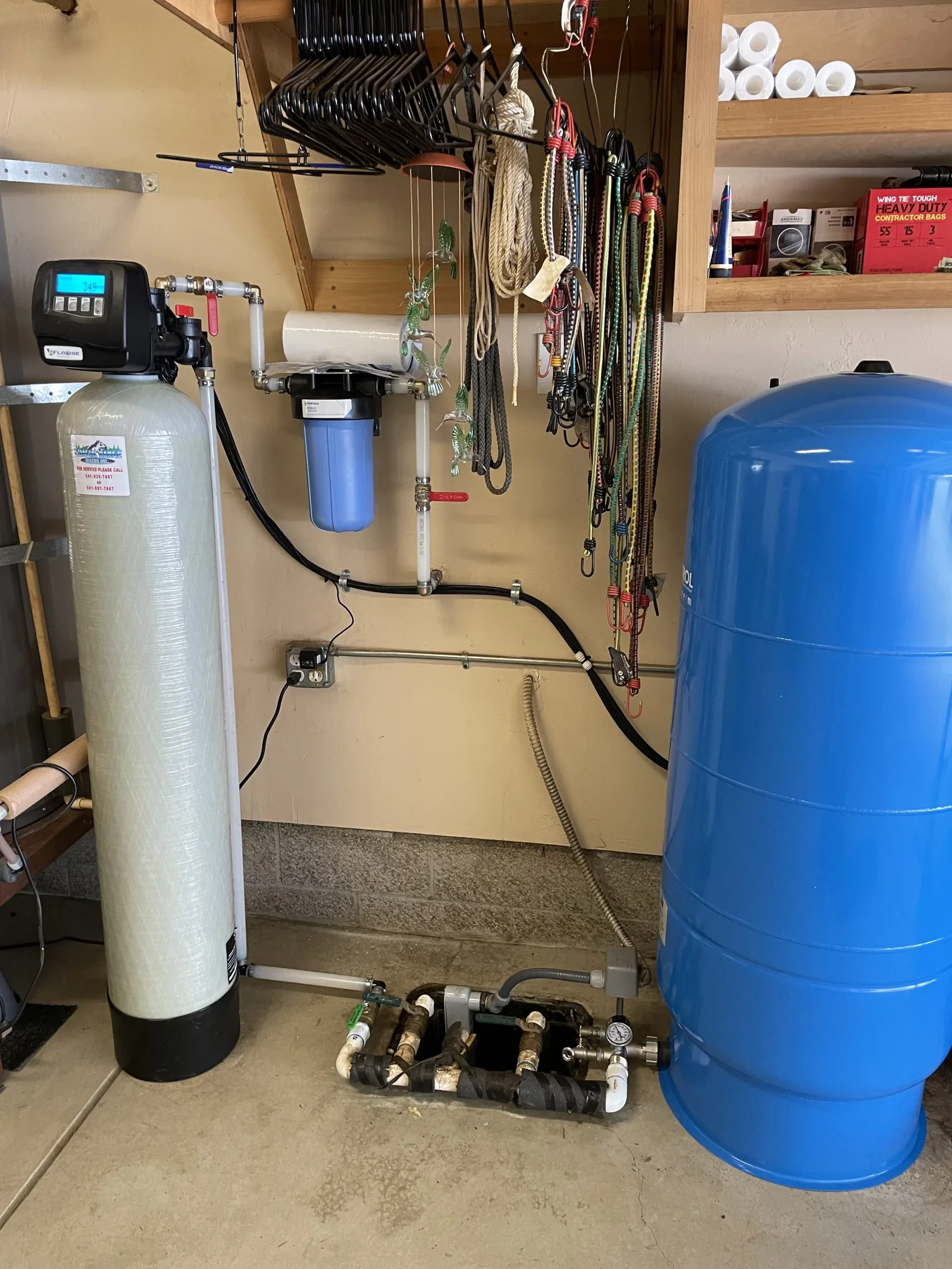
Acid neutralisation with calcite or a blended media, softening or salt-free conditioning for hardness, sequestration for low levels of iron, and corrosion control where water is aggressive to metal plumbing. Each has a maintenance interval that has to be realistic.
- Acid neutralisation for low pH
- Softening or conditioning for hardness
- Iron and manganese pre-treatment
- Sediment filtration ahead of the conditioner
- Corrosion control for aggressive water
How the job runs
-
01
Test
pH, hardness, iron, manganese, alkalinity and conductivity from a raw sample.
-
02
Design
Conditioning stages in the right order, sized to household flow.
-
03
Install
Bypass valves, drains and a service space that can actually be worked in.
-
04
Set and explain
Controls programmed and the maintenance interval explained.
What you get
- Conditioning chosen from measured chemistry
- Correct order so media is not wasted
- Bypass fitted for servicing
- Realistic maintenance interval, stated up front
What is the difference between water conditioning and water treatment?
Conditioning changes how water behaves — hardness, pH, corrosivity. Treatment removes specific contaminants such as iron, sulphur, nitrate or arsenic. Most homes need some of each, in the right order.
Is acidic well water dangerous?
Not directly to drink, but it is hard on plumbing. Low-pH water corrodes copper and brass, which can eventually leach metals into the water and cause pinhole leaks. Neutralising it protects the system.
How do I know if my water is hard?
Scale on fixtures, spotting on glassware, poor soap lather and stiff laundry. A hardness test gives the number in grains per gallon that the equipment must be set to.
Will conditioning remove iron stains?
Not on its own. Iron needs oxidation and filtration before conditioning, or it fouls the media. Treating iron with a softener alone is a common and expensive mistake.
Related services
Water softening
Removing the calcium and magnesium that scale heaters, spot glassware and shorten appliance life.
Read moreWell water filtration
Whole-house filtration designed from a water test — sediment, iron, manganese, sulphur and taste, not a generic cartridge.
Read moreWell water testing
Sampling and interpretation for bacteria, nitrate, arsenic, iron, manganese, hardness and pH.
Read moreWater conditioning across the service area
This service is available throughout Lane, Linn, Benton and Douglas counties. These pages cover the towns we are called to most.
Talk to a well tech
Not sure whether it is the pump, the tank or the well?
That is what the phone is for. Describe what the water is doing and we will tell you what it sounds like.
Request service
Book water conditioning
Send the details and we will call back with a time. If the water is off now, call 541-935-7867 instead.
Phone
Based in
22071 Fisk Rd
Noti, OR 97461
Emergency
No water, a burst line or a pump that will not stop: call any hour, including weekends.