Treatment
Water Treatment
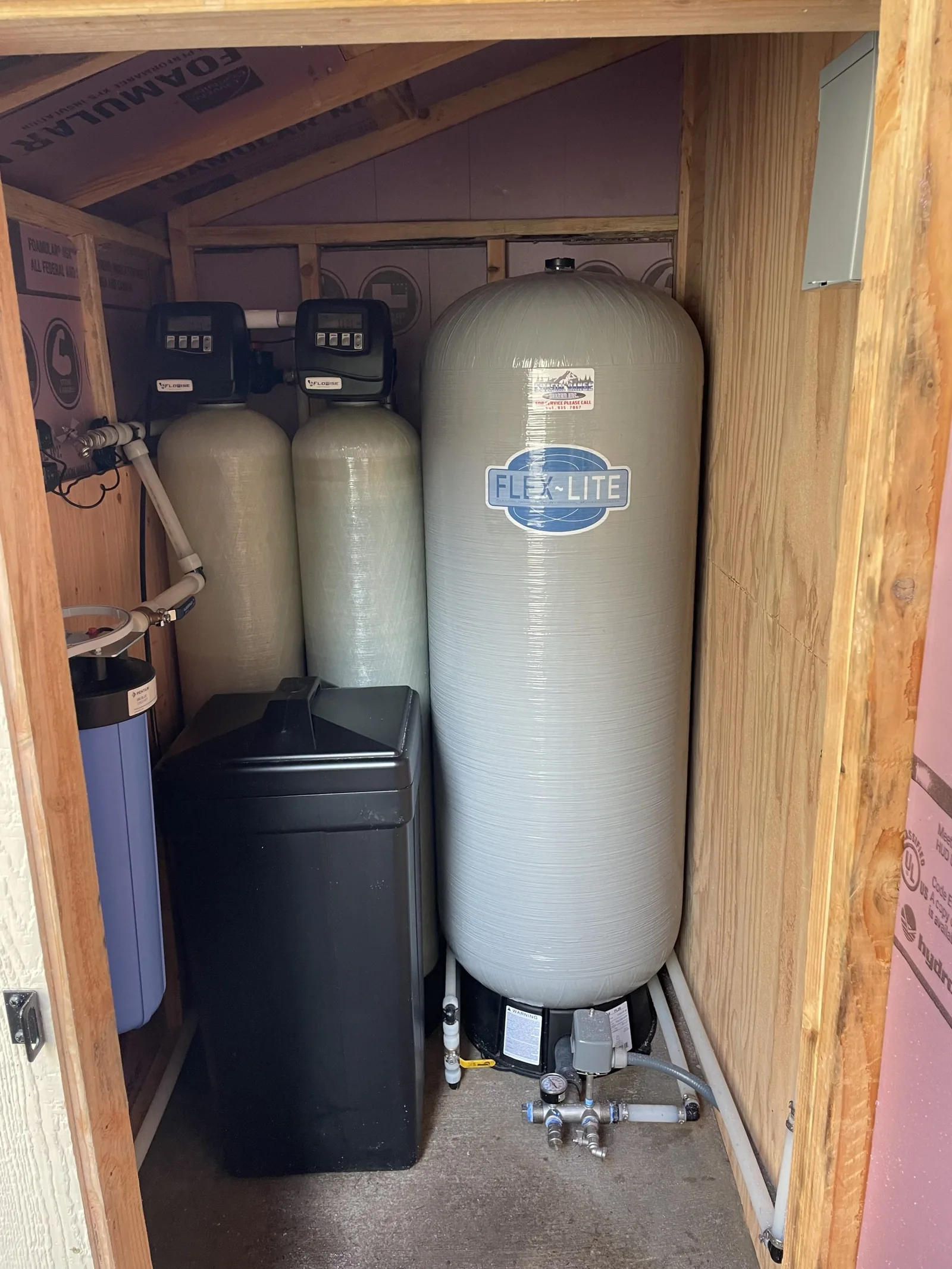
Whole-house treatment trains for the iron, sulphur, sediment and hardness common in Lane County wells.
The short answer
Well water treatment removes the contaminants that make private well water unpleasant, damaging or unsafe. In Lane County that usually means iron, manganese, sulphur, sediment and hardness, with nitrate or arsenic in specific areas. Treatment is designed as a sequence — sediment first, then oxidation or media for metals, then carbon or softening — because each stage protects the one after it.
What usually causes it
Rotten-egg smell
Hydrogen sulphide, either from the water or from bacteria in the plumbing. The source decides the treatment: aeration for the well, sanitising for the plumbing or heater.
Iron staining and metallic taste
Dissolved iron passes straight through a sediment filter and stains when it meets air. It needs oxidation and filtration, sized to the concentration.
Sediment that wrecks everything downstream
Sand and grit wear out fixtures, clog aerators and destroy treatment media. A correctly sized sediment stage protects the rest of the system.
Signs it is time to call
Any one of these is worth a phone call. Two or more together usually means something is already failing.
- Rotten-egg odour, hot or cold
- Orange or black staining
- Cloudy or gritty water
- Metallic taste
- Filters clogging within weeks
- Water discoloured after heavy rain
The order of treatment matters
A fine carbon block placed before a sediment filter loads in days. A softener placed before iron removal fouls its resin. A UV unit placed before filtration is shielded by sediment and stops working. Getting the sequence right is most of the design.
- Sediment filtration first
- Oxidation or aeration for iron and sulphur
- Catalytic media for low-level metals
- Carbon for taste and odour
- Softening for hardness
- UV last, on clear water only
Testing before treatment
Iron, manganese, hardness, pH, sulphur, nitrate, arsenic and bacteria each point to a different stage. Without a test, treatment is guesswork with a warranty. We work from lab results or arrange a sample.
How the job runs
-
01
Test
A lab panel for the parameters that matter in this region.
-
02
Design the train
Stages in the correct order, sized to the household flow rate.
-
03
Install
Whole-house installation with bypass and drain provisions.
-
04
Commission
Controls set, water tested at the tap, maintenance explained.
What you get
- Treatment designed from test results
- Correct stage order so media lasts
- Bypass valves for servicing
- Maintenance schedule explained before purchase
What is the best water treatment for well water?
There is no universal answer. The right system depends on what the test shows. Iron, sulphur, hardness and sediment each need a different stage, and the order they are installed in matters as much as the equipment itself.
How much does a whole-house well water treatment system cost?
It ranges from a few hundred dollars for a sediment and carbon stage to several thousand for a full iron, sulphur and softening train. We quote after testing rather than selling a package that may not fit the water.
Will treatment remove bacteria?
Carbon and sediment filters do not disinfect. Bacteria need UV sterilisation or chlorination, and the well head and casing should be checked for the entry point first.
How often does treatment media need replacing?
Sediment cartridges every one to three months, carbon every six to twelve, and media in backwashing tanks every five to ten years. UV lamps annually.
Related services
Well water filtration
Whole-house filtration designed from a water test — sediment, iron, manganese, sulphur and taste, not a generic cartridge.
Read moreWater softening
Removing the calcium and magnesium that scale heaters, spot glassware and shorten appliance life.
Read moreWell water purification
UV sterilisation, arsenic and nitrate treatment for wells where filtration alone is not enough.
Read moreWater treatment across the service area
This service is available throughout Lane, Linn, Benton and Douglas counties. These pages cover the towns we are called to most.
Talk to a well tech
Not sure whether it is the pump, the tank or the well?
That is what the phone is for. Describe what the water is doing and we will tell you what it sounds like.
Request service
Book water treatment
Send the details and we will call back with a time. If the water is off now, call 541-935-7867 instead.
Phone
Based in
22071 Fisk Rd
Noti, OR 97461
Emergency
No water, a burst line or a pump that will not stop: call any hour, including weekends.