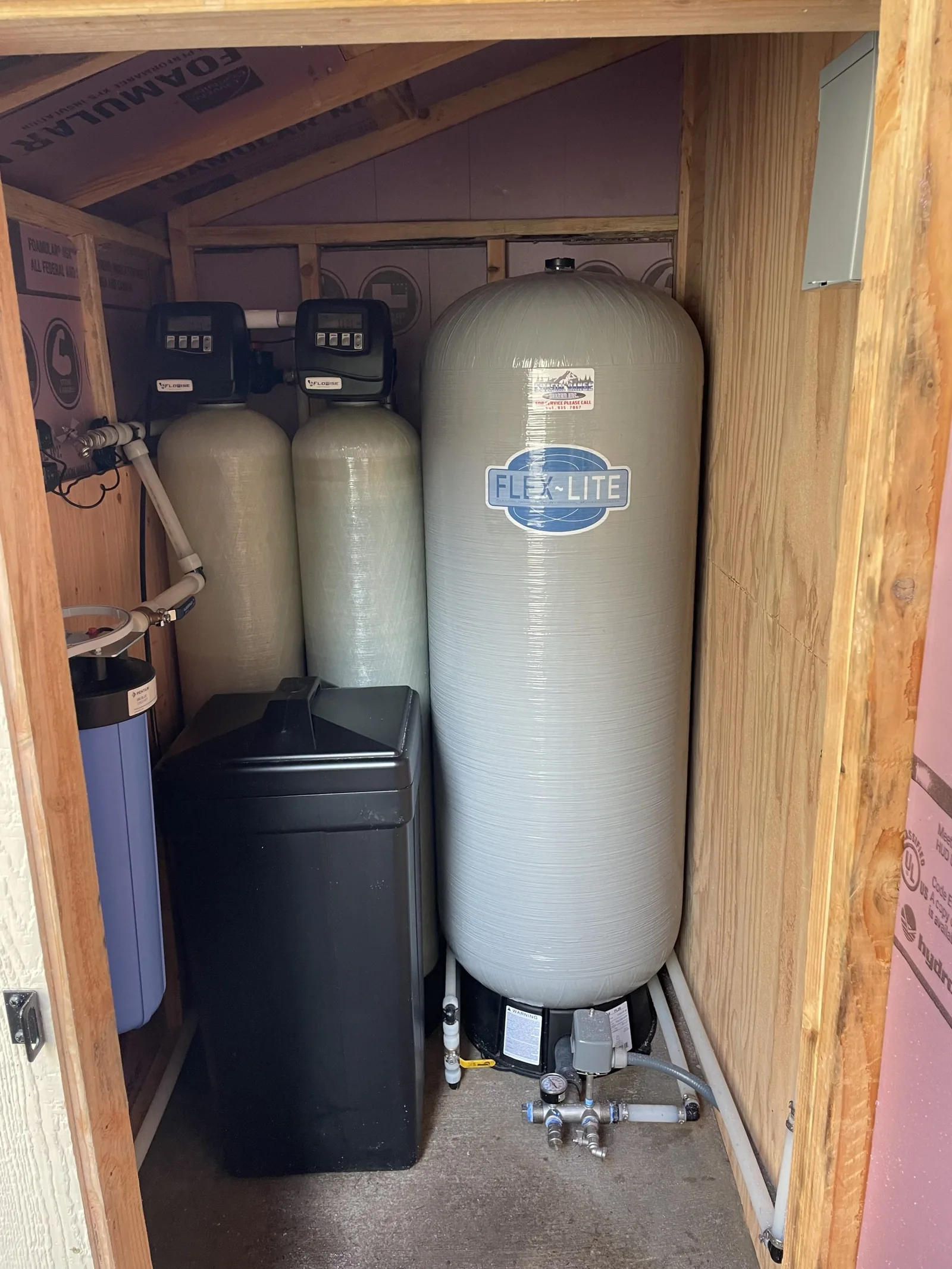
Filtration starts with a water test
A whole-house system should be built around what is actually in your well water, not around a generic filter label. A laboratory or qualified water professional can test for sediment, iron, manganese, hardness, pH, sulfur-related compounds, nitrate, arsenic, bacteria, and other concerns. The results show both the treatment target and the concentration the equipment must handle.
Testing also considers flow rate, pressure, household size, and the well’s recovery. A filter that is too small can restrict water and reduce pressure; one that is oversized may cost more without improving safety. In western Oregon, seasonal changes can make a follow-up test useful when appearance, taste, or odor changes.
The treatment train has several jobs
Most whole-house systems use more than one stage. A sediment prefilter catches sand, silt, rust flakes, and other particles before they reach valves or finer media. A carbon filter can improve chlorine taste in municipal water and reduce some odors and organic compounds, but carbon is not a universal answer for dissolved metals or every contaminant.
Other tanks use specialized media. Oxidizing filters convert dissolved iron, manganese, or hydrogen sulfide into particles that can be captured. Water softeners exchange hardness minerals for sodium or potassium. Neutralizing filters raise acidic pH. Reverse osmosis is commonly installed at a single drinking-water tap because it produces a limited flow and sends reject water to a drain.
- Sediment filtration for sand, silt, and visible particles
- Iron, manganese, or sulfur treatment selected from test results
- Softening for hardness that causes scale
- pH correction to protect plumbing and fixtures
Where the equipment is installed
Whole-house equipment is normally placed on the main line after the pressure tank and before water branches to the house. That location lets treated water reach showers, laundry, toilets, and appliances. A bypass valve allows service or emergency water use without forcing water through a disconnected tank, while shutoff valves make cartridge changes safer.
The installer must leave room to remove housings, add salt or media, and connect a drain when backwashing is required. Electrical controls and drain lines need protection from leaks and freezing. If the pressure tank, pump controls, or plumbing are already crowded, a site inspection can prevent an inconvenient installation.
How backwashing and maintenance work
Some media become loaded with captured material and need a backwash cycle. A control valve sends water backward through the tank, loosens the bed, and carries the waste to a suitable drain. The cycle uses water and needs enough flow; a weak well or undersized drain can keep the system from cleaning itself correctly.
Cartridge filters are replaced when pressure drops or the manufacturer’s service interval says they are due. Salt-based softeners need salt and occasional cleaning. Media tanks eventually need inspection or replacement. Keep a simple record of service dates, pressure readings, and any changes in taste or odor so a technician can see patterns instead of guessing.
What filtration cannot fix by itself
Treatment does not repair a failing well, a cracked casing, a leaking water line, or a pump that cannot maintain pressure. Bacteria after flooding or a damaged wellhead require prompt testing and a professional response. Do not drink water after flooding until it has been tested and a qualified professional or public-health guidance says it is safe.
A filter also cannot make every contaminant harmless simply because the water looks clear. Nitrate and arsenic are invisible, and the correct equipment depends on the test result and certified performance claims. If a system is already installed but the problem continues, do not keep adding cartridges at random; retest the water and inspect the treatment setup.
A practical path to cleaner water
Start with a current water test, then match the treatment stages to the results and your household’s flow needs. Coastal Range Water Inc. serves private-well owners in Lane, Linn, Benton, and Douglas counties from Noti. A technician can review the well, pressure equipment, plumbing layout, and treatment goals before recommending a setup.
For help with well-water filtration, call 541-935-7867. If a leak or equipment failure is actively threatening the home, switch the pump off at the breaker and avoid repeated resets while arranging service.
A useful system should also be easy to monitor. Ask where the untreated and treated water can be sampled, how a pressure drop will be noticed, and what happens during a power outage or backwash cycle. Keep replacement cartridges and service information together, but do not change media, bypass plumbing, or disassemble a pressurized housing until the pump is off and pressure has been relieved. Clear labels help anyone in the household shut off the right valve during a leak or maintenance visit.
Questions about this
Does one filter remove every well-water problem?
Will whole-house filtration lower my water pressure?
How often do well-water filters need service?
Should I install treatment before testing my well?
Related services
Well water filtration
Whole-house filtration designed from a water test — sediment, iron, manganese, sulphur and taste, not a generic cartridge.
Read moreWell water purification
UV sterilisation, arsenic and nitrate treatment for wells where filtration alone is not enough.
Read moreWater softening
Removing the calcium and magnesium that scale heaters, spot glassware and shorten appliance life.
Read more