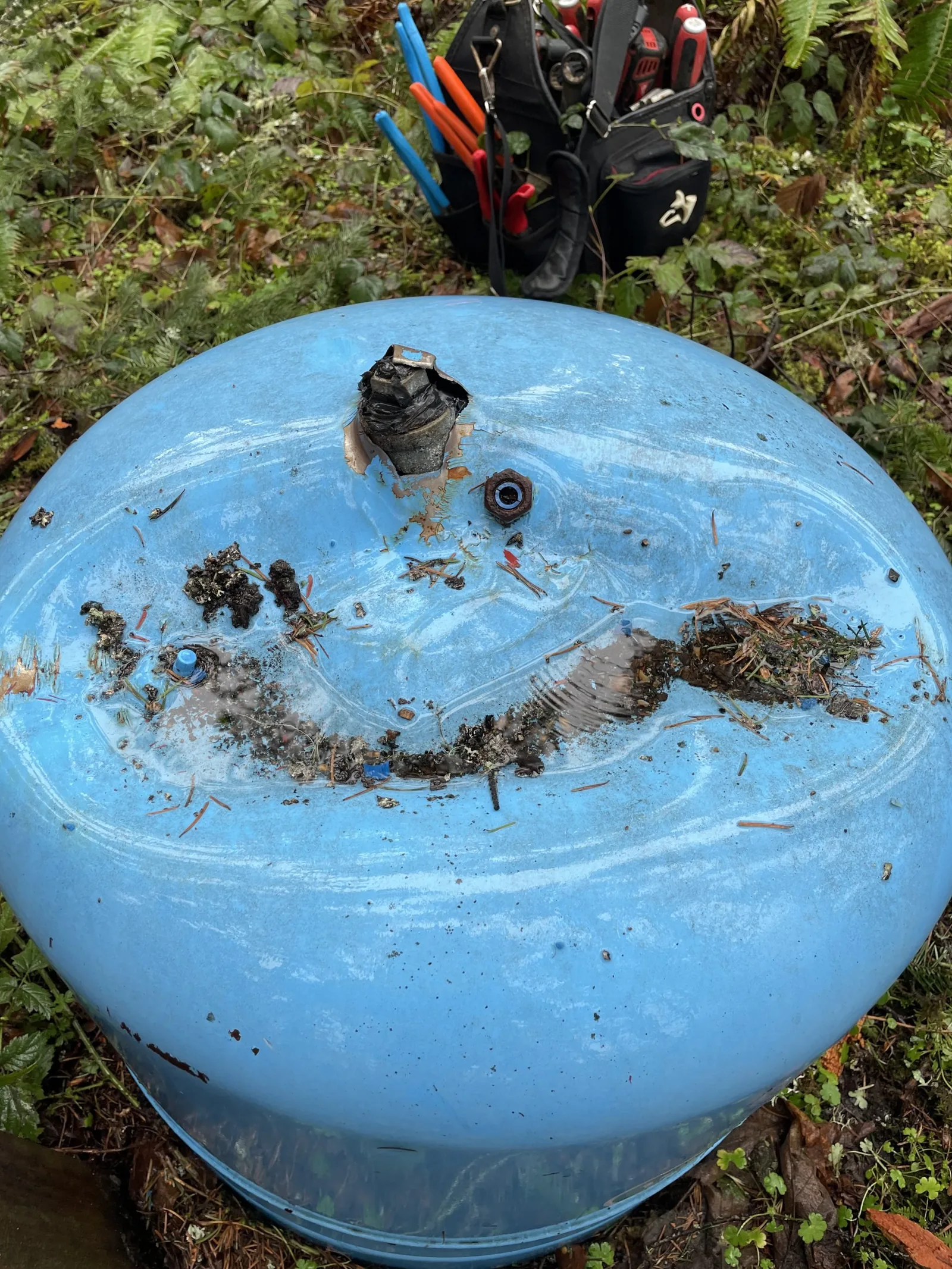
Confirm how much water is missing
Open a cold-water faucet briefly and ask whether the problem affects the entire home or only one fixture. Check another bathroom, an outdoor spigot, and any pressure gauge near the tank. If only one faucet is affected, a clogged aerator, shutoff, or local plumbing issue is more likely than a well failure.
If every fixture is dry, stop running appliances and toilets. Look for a leak, flooding, or a broken line near the house, pump equipment, or wellhead. A sudden loss of water can be urgent even when the pump itself is still operating.
Check the electrical supply safely
Look at the well-pump breaker once. If it is tripped, switch the pump off and arrange service rather than repeatedly resetting it. A trip can indicate a short, damaged motor, failing control box, or wiring problem. Keep hands away from wet electrical equipment and do not remove panels unless you are qualified to do so.
Some systems have a separate pump disconnect or fuse, and some have a control box near the pressure tank. Do not bypass a control, bridge wires, or work inside an energized box. Tell the technician what you observed, including any burning smell, buzzing, lightning, or recent electrical work.
Read the pressure gauge and switch
A pressure gauge near the tank can provide a useful clue. A very low or zero reading with no pump sound may point toward a power, control, or pump problem. A low reading with the pump running can indicate a failed pump, blocked intake, leak, or a well that is not recovering. A pressure gauge is evidence, not a diagnosis.
Do not adjust the pressure switch cover or contacts while the system is energized. The switch controls high-voltage equipment, and an incorrect adjustment can damage the pump or create a safety hazard. Photograph the gauge and equipment labels for the service technician instead.
Consider a low-yield or dry-well condition
A well can temporarily produce less water after extended pumping, seasonal groundwater changes, drought, or a leak that keeps the pump running. You may notice water returns after the system rests, then disappears again during showers or irrigation. That pattern is different from a motor that never starts, but only testing can separate the causes.
Turn off irrigation and other high-demand uses, then allow the well to recover without repeatedly cycling the pump. Do not lower tools or pour chemicals into the well. A professional can check static and pumping levels, flow, pump performance, and the condition of the well before discussing repair, storage, or replacement options.
Protect the house and the water
If the loss of water follows flooding, a damaged cap, or work around the wellhead, treat the water as potentially contaminated. Do not drink water after flooding until it has been tested and appropriate guidance confirms it is safe. Keep the well cap closed and do not use an improvised cover that allows insects, dirt, or surface water inside.
If a leak is flooding a basement, crawl space, or pump house, shut off the appropriate water supply and electrical source only if you can do so safely. Move people away from standing water near electrical equipment. Record the time, sounds, gauge reading, breaker position, and any visible leak before calling.
When to call for emergency service
Call promptly when the whole house has no water, the breaker trips again, the pump runs continuously, water is near electrical equipment, or a water line is actively leaking. Coastal Range Water Inc. provides emergency service 24 hours for urgent well and pump problems in Lane, Linn, Benton, and Douglas counties.
Call 541-935-7867 and describe the symptoms rather than requesting a specific part. A technician can diagnose the power, controls, pressure tank, pump, well, and water line in the right order. Leave the pump off if a breaker has tripped or the system is running without building pressure.
Have basic information ready when you call: the pump type if known, the last time water worked, whether pressure was normal, whether the pump is making noise, and whether any breaker or alarm changed. Mention recent storms, excavation, irrigation, or electrical work. Do not climb into a well pit, enter a confined space, or handle submerged wiring. These details can help a technician bring appropriate diagnostic equipment and reduce the time the home is without water. Keep children and pets away from open access points and standing water until the area is safe.
- Check whether every faucet is affected
- Look at the pressure gauge without opening equipment
- Check the pump breaker once; do not keep resetting it
- Stop irrigation and high-demand water use
- Keep away from wet electrical equipment
- Call for service if water does not return promptly
Questions about this
Should I reset the well-pump breaker?
Why does water come back after the well rests?
Can I open the well cap to see the water level?
What if the pump runs but no water reaches the house?
Related services
Emergency pump repair
Around-the-clock response for no-water calls, burst lines, failed pressure tanks and pumps that will not shut off.
Read morePump diagnostics
Pressure, amperage, flow and drawdown testing to find the actual fault instead of replacing parts by guesswork.
Read moreWater line repair
Finding and repairing leaks between the well, the pressure tank and the house — without digging up more yard than necessary.
Read more