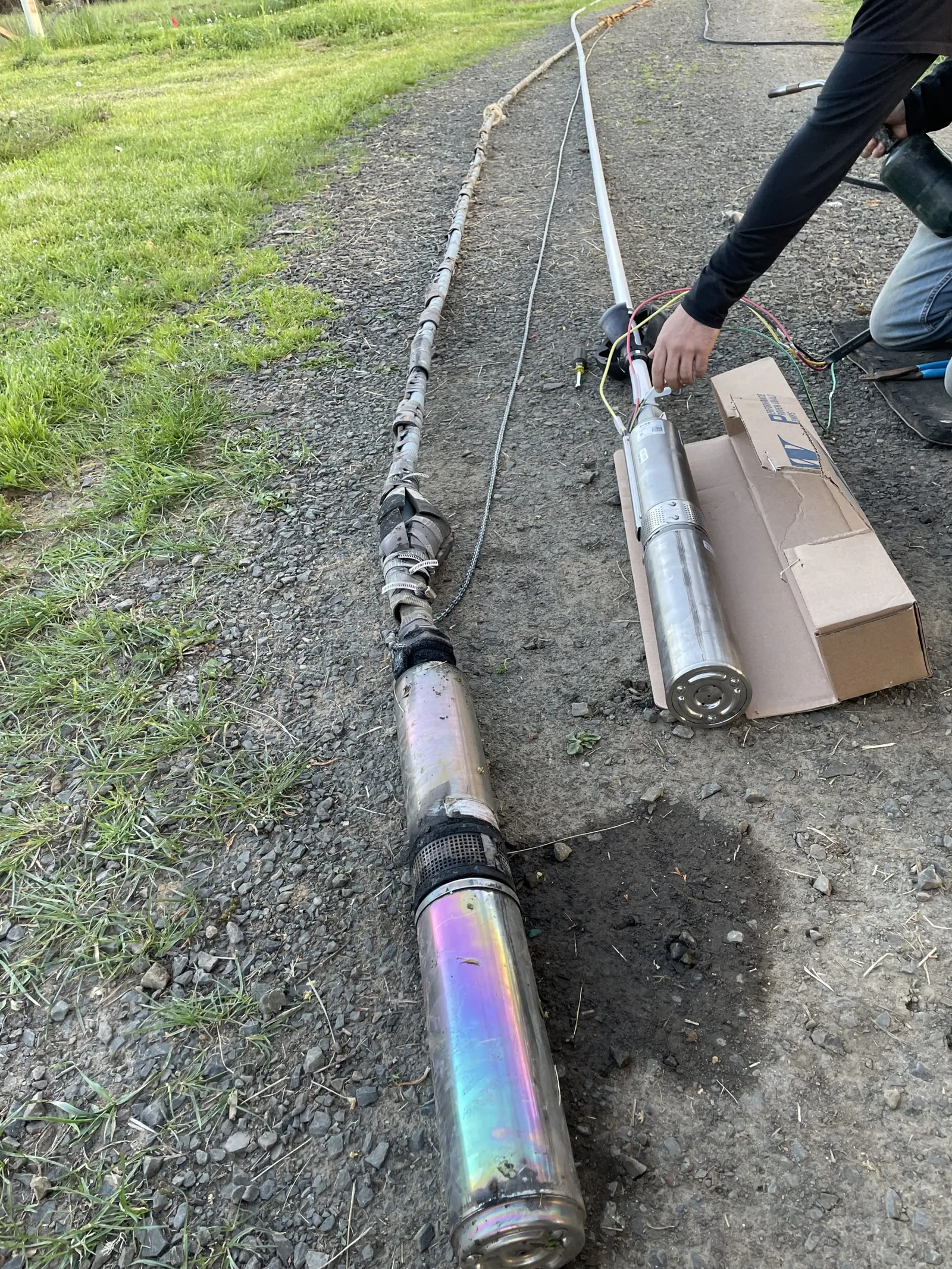
Begin with a complete diagnosis
No water, low pressure, noise, or a tripped breaker can come from the pump, controls, pressure tank, wiring, water line, or well. Replacing a pump before testing those parts can leave the original problem in place. A useful diagnosis identifies what failed, what was tested, and whether the pump is delivering its expected flow.
If the pump is running constantly, switch it off at the breaker to prevent overheating. Do not keep resetting a tripped breaker or open electrical covers. Ask the technician to explain the findings in plain language, including whether the issue is mechanical, electrical, hydraulic, or a combination.
When repair may make sense
Repair is often worth discussing when the pump motor is sound and the fault is in an accessible component. Examples can include a pressure switch, gauge, control box, capacitor, check valve, tank connection, or a leak that is separate from the pump. A repair can restore service without disturbing a pump that is otherwise performing well.
The right choice depends on the equipment, access, previous repairs, and condition of connected parts. A repair is less attractive when the pump has repeated failures, cannot meet demand, or requires work that will soon be repeated. Get the diagnosis first rather than choosing based on a single symptom.
When replacement may be sensible
Replacement becomes more reasonable when the motor or pump end is worn, the unit cannot deliver required flow, repair history is extensive, or the pump has failed after years of service. A new pump should be selected for the actual well yield, depth, pressure range, pipe size, and household demand—not simply by matching a label.
The inspection should also consider the drop pipe, wiring, pitless adapter, check valve, pressure tank, and controls. Replacing only the pump while leaving a damaged cable or undersized tank can create another service call. Ask what related components will be tested and whether any preventive work is recommended.
Access changes the decision
Some pumps are easier to reach than others. A shallow-well jet pump may be accessible near the pressure tank, while a submersible pump is installed down the well and requires specialized removal equipment. Difficult access, a damaged casing, or a problem at the wellhead can affect the work plan and the time needed for safe service.
Do not pull a well pump, disconnect a pitless adapter, or dig around a buried line yourself. Equipment can be heavy, pressurized, and electrically connected. A professional should confirm the wellhead and lifting setup, protect the opening from contamination, and verify the system after the work is complete.
Consider the whole water system
A pump replacement will not fix a low water level, a leaking service line, a clogged filter, or a pressure tank that has lost its charge. Before approving work, consider whether the pressure problem happens at every fixture, whether water quality changed, and whether the well recovers after heavy use. Those clues help define the real scope.
If flooding or a damaged wellhead may have introduced contamination, do not drink the water until it has been tested. Mechanical repairs and water testing answer different questions. Keep a record of prior service, pump model, pressure settings, and symptoms so future maintenance is easier.
Questions to ask before approving work
Ask what failed, how it was tested, what alternatives were considered, and which parts will be inspected during repair or replacement. Ask whether the proposed pump matches the well’s measured capacity and the home’s pressure requirements. You should receive a clear explanation of work that is necessary now versus work that can be planned later.
Avoid decisions based on a remote diagnosis or an unsupported promise that one component will solve everything. A reputable inspection should leave you with documented findings and practical options. If there is no water, protect the pump and plumbing by turning off power when appropriate while you arrange service.
Planning dependable service
The best decision balances safety, current failure, equipment condition, and future reliability. Repair can be appropriate for a limited, proven fault; replacement can be sensible when the pump is worn or repeated repairs no longer provide dependable service. The answer should follow testing, not pressure to choose quickly.
Coastal Range Water Inc. serves Lane, Linn, Benton, and Douglas counties from Noti. Call 541-935-7867 for well-pump repair, replacement, and emergency service available 24 hours. A technician can inspect the complete system and explain the available path before work begins.
Questions about this
Is a failed pressure switch the same as a failed pump?
No. A pressure switch can prevent a healthy pump from starting or stopping correctly, while a pump can fail even when the switch works. Testing voltage, pressure, cycling, and flow helps separate the causes. Do not open the switch cover or handle wiring unless qualified.
Should an old pump always be replaced?
Age is useful context, but it is not a diagnosis. A sound older pump may need an accessible control repair, while a newer pump may have a serious electrical or hydraulic problem. Consider measured performance, repair history, access, and the condition of related components.
What should be checked with a replacement pump?
The well’s yield, pump depth, flow requirement, pressure range, drop pipe, wiring, check valve, pressure tank, controls, and wellhead should be considered. Matching only horsepower can produce poor results. Ask for testing that confirms the new pump suits the entire system.
What should I do while waiting for pump service?
Conserve water and switch the pump off at the breaker if it runs continuously or a breaker trips. Do not repeatedly reset the breaker or open electrical covers. If flooding affected the wellhead, avoid drinking the water until testing confirms it is safe.
Related services
Well pump repair
Diagnosis and repair for submersible, jet and booster pumps that have stopped, slowed down or started short-cycling.
Read moreWell pump replacement
Pulling an ageing or failed pump and setting a new one, with the well, the drop pipe and the controls inspected while it is open.
Read moreWell pump installation
New submersible, jet and booster pump installation sized to the well yield, the depth and what the house actually uses.
Read more